 Size chart






Pinches at the Waist, Loose at the Hips: How to Choose Pants in Plus Size
Reading time 5 min13.12.2025
Pants pinch at the waist but are roomy at the hips: why this happens and how to choose plus size without “toughing it out”
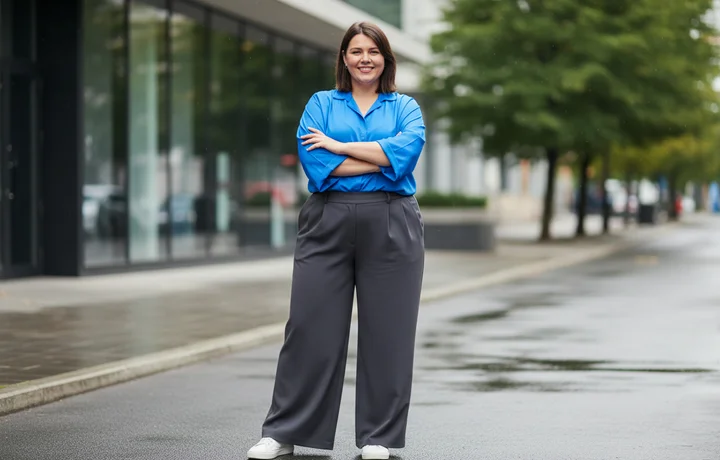
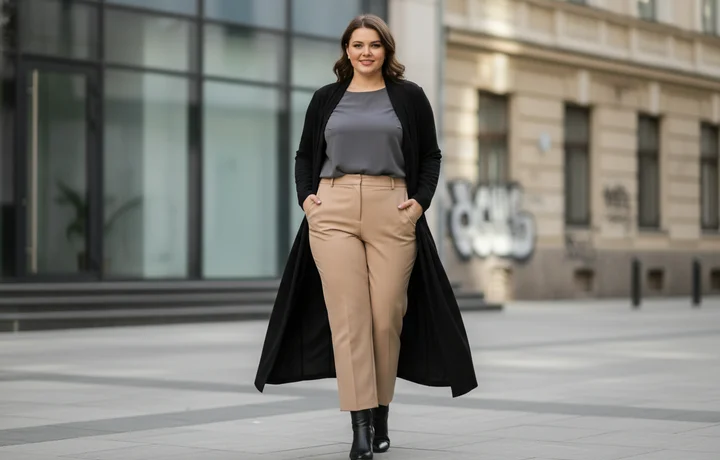
Among the models with a soft waistband: NORA mom-fit trousers and IRIS trousers with side stripes — neither uses a stiff elastic that digs in.
This isn’t “something wrong with your figure” — it’s a typical situation in plus size.
A perfect fit is when you don’t think about your pants all day. You don’t pull up the waistband every 10 minutes, you don’t adjust your stride, you don’t catch fabric at the hips. In plus size, “the right fit” is a combination of waist rise height, ease at the belly/hips, and how the model behaves when you sit down.
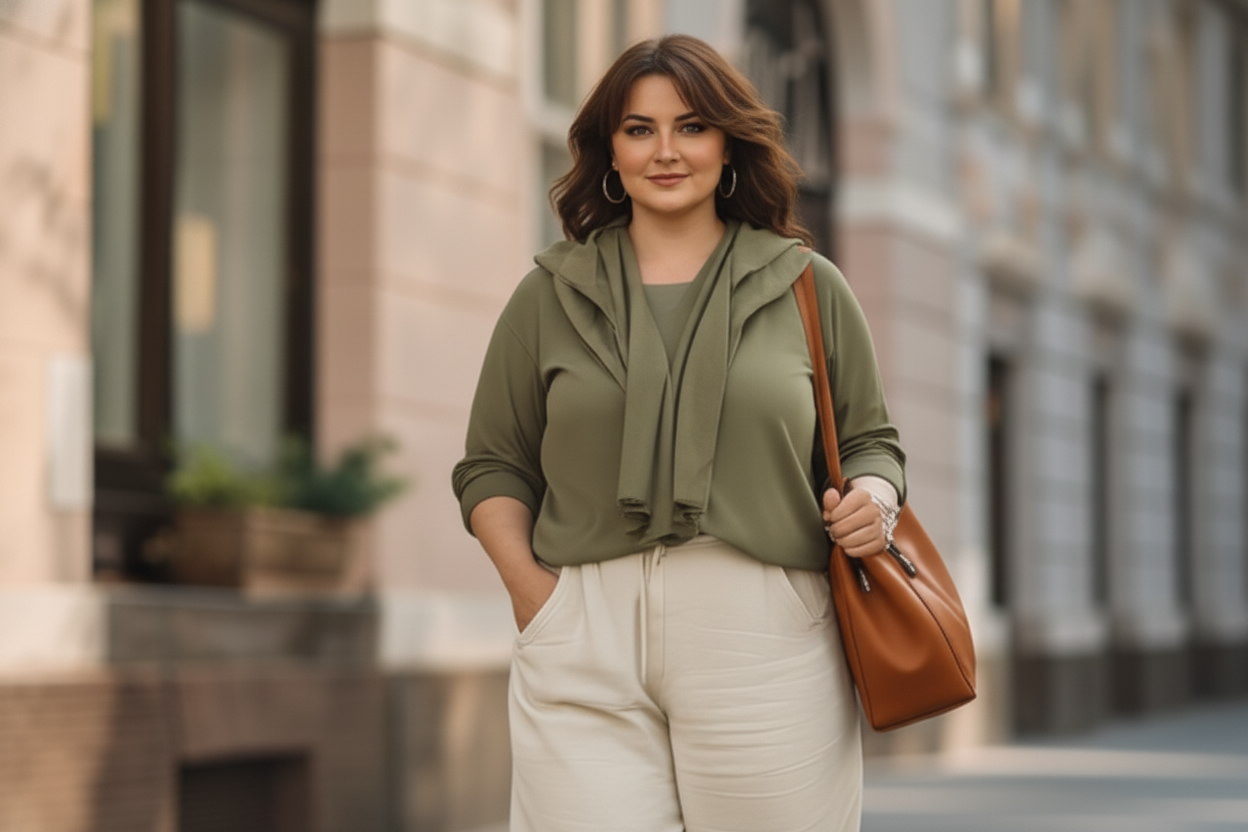
The combination “pinches at the waist, but fine/loose at the hips” is one of the most common in plus size. And it almost never means you’re “wrong.” It means that:
- you have individual proportions (for example, a belly + relatively smaller hips, or high sensitivity in the waist area);
- the waistband and the pants’ rise are made in a way that pinches right at the point where the body is least comfortable;
- the fabric or cut doesn’t give freedom while sitting and moving.
Plus — the body “lives”: after eating, throughout the day, during your cycle, with bloating, waist circumference can change. If the waistband doesn’t adapt, you’ll feel pressure even in “your” size.
7 reasons the waist pinches but the hips don't
The waistband is stiff or doesn't “breathe”
A stiff waistband (doubled, dense, with a coarse elastic) can dig in even if the pants fit perfectly at the hips. In plus size, the waistband should either adjust or be soft.
The rise lands right on a sensitive belly point
A high rise can be great, but if the waistband sits right on the most sensitive area, you'll get a "tourniquet" effect while sitting. It's not about centimeters — it's about the contact point.
No ease for sitting (front rise / crotch depth)
If the rise depth is too shallow, sitting down pulls the fabric upward — and the waistband starts pinching harder than when standing. That's why "fine while standing in the fitting room" doesn't work as a test.
The waist-to-hip difference is small, but the waistband is built “for the waist”
Some models are designed so the pants are "held up" by the waist. If you don't have a sharp transition, the waistband can either slide down or squeeze tighter while looking for something to grip.
The fabric doesn't stretch
Non-stretch fabric doesn't "forgive" and reacts to the slightest changes in the body. If the waistband doesn't adjust, pressure is almost guaranteed, especially while moving.
The waistband is narrow
A paradox: a narrow waistband often pinches harder because it creates a "thin line of pressure." A wider waistband sometimes distributes the load more softly.
You chose the size by waist when you should have chosen by hips (or vice versa)
In plus size, this rule usually works best: choose pants based on the largest area, and adjust the smaller one with construction. If the largest area is the waist (due to the belly) and the hips are smaller, you need models with adjustment, not ones that are "perfect at the hips."
The most important plus size rule: pants shouldn't feel like a tourniquet at the waist
In comfortable pants, you can:
- sit down and breathe calmly;
- lift your knee — and the fabric doesn't pull at the crotch;
- walk for 10 minutes — without wanting to unbutton anything.
If the waistband already pinches after 2 minutes, it won't "stretch out" — it'll get worse throughout the day.
Which waistband helps when the waist is sensitive
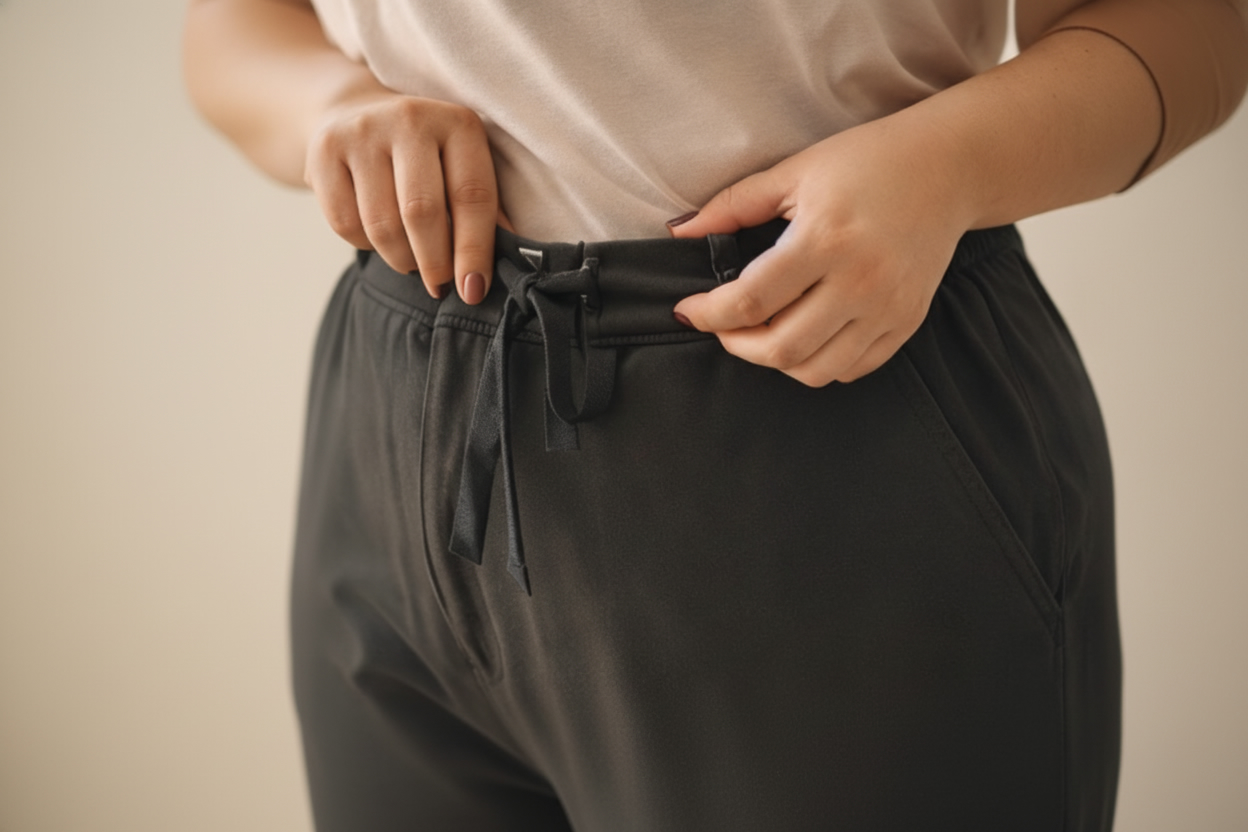
Soft all-around elastic
The most versatile option for daily life. Gives ease for comfort throughout the day.
Elastic only at the back
A compromise of "neat at the front + comfortable at the back." Good if the belly is sensitive but you want a more classic look.
Drawstring / adjustment
A lifesaver when your measurements "fluctuate." Also ideal if the hips are smaller and the waist changes.
Elastic side inserts
Works well in classic pants: holds its shape but gives freedom.
What to avoid if your waist reacts to pressure
- an overly stiff waistband with no stretch;
- a narrow, tight elastic;
- a waistband that "digs in" while sitting.
Which cut to choose if the waist is "problematic" but the hips aren't
Straight cut
Often the simplest and most comfortable. Doesn't add bulk but gives freedom.
Palazzo / wide-leg
Can be perfect if the waistband is right: they don't pinch at the hips and give a lot of freedom of movement. The key here is that the waistband isn't a "squeezer."
Joggers / elastic-waist pants
Often win on comfort, but pay attention to the quality of the elastic and whether it doesn't "squeeze in a line."
A high rise "but soft"
Don't give up on a high rise if you like it — just look for a version with a softer waistband and enough rise depth.
How to choose a size if your waist is larger than “typical for this size”
This approach works:
- Go by the largest area (often the waist/belly).
- Check whether there's waist adjustment (elastic/drawstring/inserts).
- If the hips end up too loose, that's fine, because it's easy to "not squeeze" them — but squeezing the waist is bad.
In plus size, comfort is always more important than "perfect at the hips," because "perfect at the hips" often means "painful at the waist."
How to check during a fitting: is it the size or the construction that's pinching
There's a simple marker:
- if it pinches even standing up, and you can't take a deep breath — the size is probably too small, or the waistband is too stiff;
- if it's fine standing but pinches sharply while sitting — it's almost always the rise/seat depth/waistband, not "the wrong size for you."
So sitting down during a fitting is a must. And sit for at least a minute.
How to buy such pants online (and not get it wrong)
Ask for or look in the description for:
- the garment's waist circumference at rest and stretched (if the waistband is elastic)
- front and back rise height (front rise / back rise)
- fabric composition and presence of stretch
- whether there's waist adjustment (drawstring/inserts/elastic)
- thigh width (circumference/half-circumference at the leg), if you're worried about it being "too loose"
If this information isn't available, you're essentially buying on luck. For plus size that's too costly — both in nerves and in returns.
The 30-second “mine or not mine” test
- Take a deep breath — the waist shouldn't constrict.
- Sit down — the waistband doesn't dig in, the belly isn't "squeezed."
- Lift your knee — no pulling at the crotch.
- Walk a bit — you don't feel the urge to adjust anything.
- After 3 minutes you feel normal, not "on edge."
Fit isn't "right or wrong" — it's "suited to your life." If you sit a lot, test while sitting. If you walk a lot, take a few steps and bend over. Pants should adapt to you, not the other way around — and then they become a favorite piece, not a compromise.
And if you want to add some soft shape at the waist without feeling pressure, sometimes it's easier to do that with accessories rather than a tight pants waistband.
What measurements are needed to buy such pants online?
Waist at rest/stretched, hips, front/back rise height, fabric stretch, and waistband type.
Will pants “stretch out” if they pinch at the waist?
Rarely. If pinching appears during fitting, it usually gets worse over the day. It's better to look for a different waistband construction or fit.
Which pants cut is most comfortable when the waist is larger than the hips?
A straight cut, palazzo, or models with waist adjustment. Size is usually chosen by waist, and the cut compensates for the hips.
What's best to choose in plus size if the waist is sensitive?
A soft waistband, elastic (all-around or at the back), a drawstring or stretch inserts, plus a fit that's comfortable to sit in.
Why do pants pinch at the waist but feel loose at the hips?
Due to a stiff waistband, a poor fit, insufficient rise depth, or proportion differences. Often the issue is the waistband construction, not “your figure”.