 Size chart






Pants Rise in Plus Size: How to Choose for Comfort in Motion
Reading time 8 min01.12.2025
Pants rise in plus size isn’t just “raise/lower the waistband.” It’s about whether the model gives your body air and movement: so it doesn’t pinch the belly, doesn’t pull at the crotch, doesn’t slide down while sitting, and doesn’t make you adjust yourself every 10 minutes.
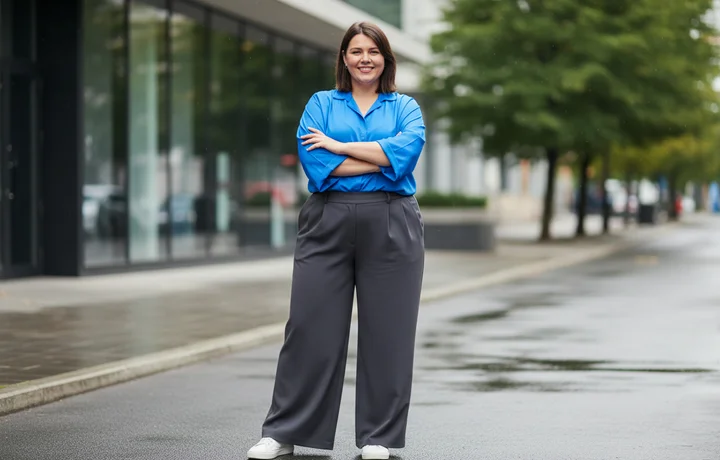
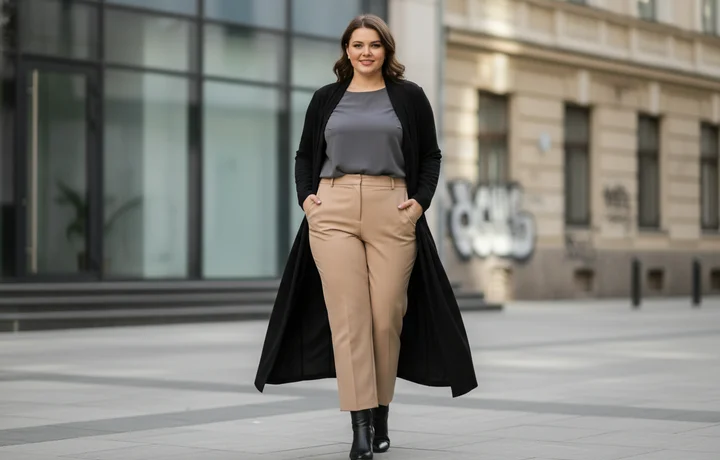
Examples of trousers with a thoughtful fit: NORA mom-fit trousers with a waistband that holds shape without squeezing, and RADA palazzo trousers with a high rise for extra room at the waist.
Below is a simple guide to reading rise by construction (front rise / back rise / crotch depth) and testing pants the way you actually live, not the way you stand in front of a mirror.
Rise isn’t just “where the waistband sits” — it’s how the pants behave with your body
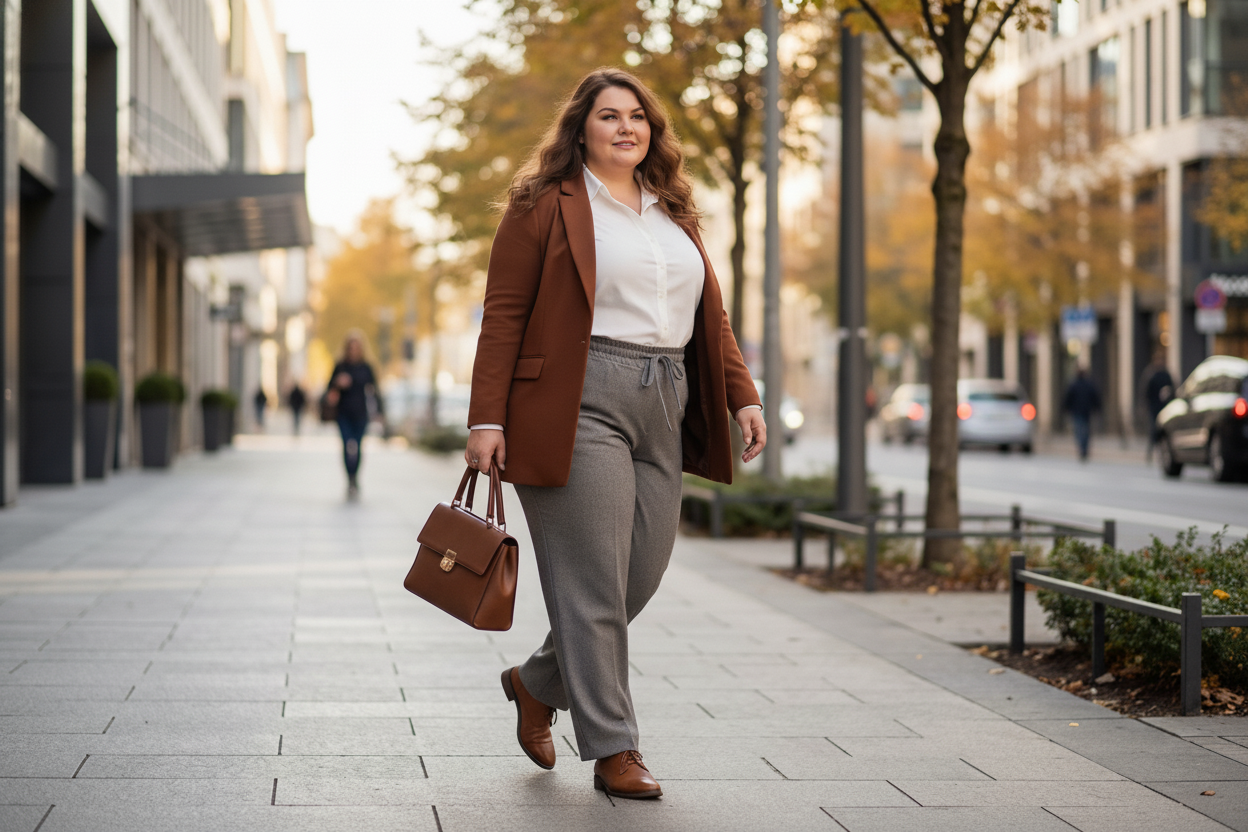
When people say “pants rise,” most imagine one thing: high/mid/low. But in real life, rise is a whole “comfort mechanism.” It determines whether the belly gets pinched, whether the crotch pulls on a step, whether the pants slide down when you sit, and whether you’ll have to adjust them all day.
In plus sizes this feels stronger, because the body has more zones that need ease: the belly, hips, lower back, inner thigh. So it’s important to look not only at the “height” of the rise, but at three things at once:
- Front rise (how much fabric runs from the crotch seam to the waistband at the front)
- Back rise (the same at the back — this is often what saves you from sliding down)
- Crotch depth (whether there’s enough room in the crotch area and while sitting)
If any of these parameters isn’t “yours” — even a perfectly matching size by circumference can feel terrible.
High, mid, and low rise: how it works specifically in plus size
High rise (at navel level or above)
A high rise often becomes a favorite because it secures the pants better and gives a sense of being “put together.” It makes it easier to avoid sliding down, especially if you’re active, walk a lot, bend over, sit down and stand up.
But there’s a “trap”: if the waistband is stiff or sits right on the sensitive belly area, a high rise can make it feel like the pants are controlling your breathing. In a seated position this feels twice as strong.
When a high rise usually works:
- you want stable fixation so you don’t have to keep pulling up the waistband;
- you have a difference between waist and hips (the pants “sit” well on the waist);
- you’re comfortable with the waistband higher rather than lower.
When it may not work:
- the belly is sensitive to pressure, especially while sitting;
- a stiff waistband digs in, even if the hips fit fine;
- the fabric doesn’t stretch and “doesn’t forgive” movement.
Here’s an important nuance for plus sizes: a high rise is comfortable only when the waistband and cut aren’t stiff. High — yes. Squeezed — no.
Mid rise (slightly below the navel)
A mid rise is often the most comfortable compromise for plus size, especially if you sit a lot (driving, at the office, at home). It presses less from above, often sits more softly on the belly, and handles the body’s daily fluctuations better (food, bloating, cycle).
A mid rise doesn’t always give the “put-together” effect of a high rise, but it very often wins on the main thing: you stop thinking about your pants.
Low rise (below the navel)
A low rise rarely becomes an everyday favorite in plus size. It more often causes:
- sliding down (because the waistband sits on the wider hip area instead of the waist),
- chafing while moving,
- a feeling of “constantly pulling it up.”
It can suit someone individually — but if you need pants “for life,” not “for photos,” a mid or high rise is usually more comfortable.
Why it pinches at the waist even though “the size is mine”
This is a super-typical story in plus sizes: the hips fit perfectly, but the waist pinches. Most often the cause isn’t the size number, but the construction:
- A stiff waistband (doubled, dense, “won’t bend”)
- Insufficient front rise (the front of the waistband “jumps up” while sitting and digs in)
- Zero stretch in the fabric or waistband
What matters: if pants already pinch during the fitting, the chance they’ll “stretch out” is small. Usually it pinches not because you’re “not used to it,” but because the pants aren’t built for movement and sitting in your particular rise.
The waistband: detail #1 that decides comfort in plus size
When looking for the “right rise,” don’t look only at the height — look at the waistband type too:
- A soft all-around elastic — often the most comfortable for everyday wear
- Elastic only at the back — a compromise: looks neat at the front, adjusts at the back
- A drawstring/adjustment — great if your measurements “fluctuate” (especially between waist and hips)
- A stiff waistband + zipper/button — looks nice but can pinch if the cut isn’t a perfect match for you
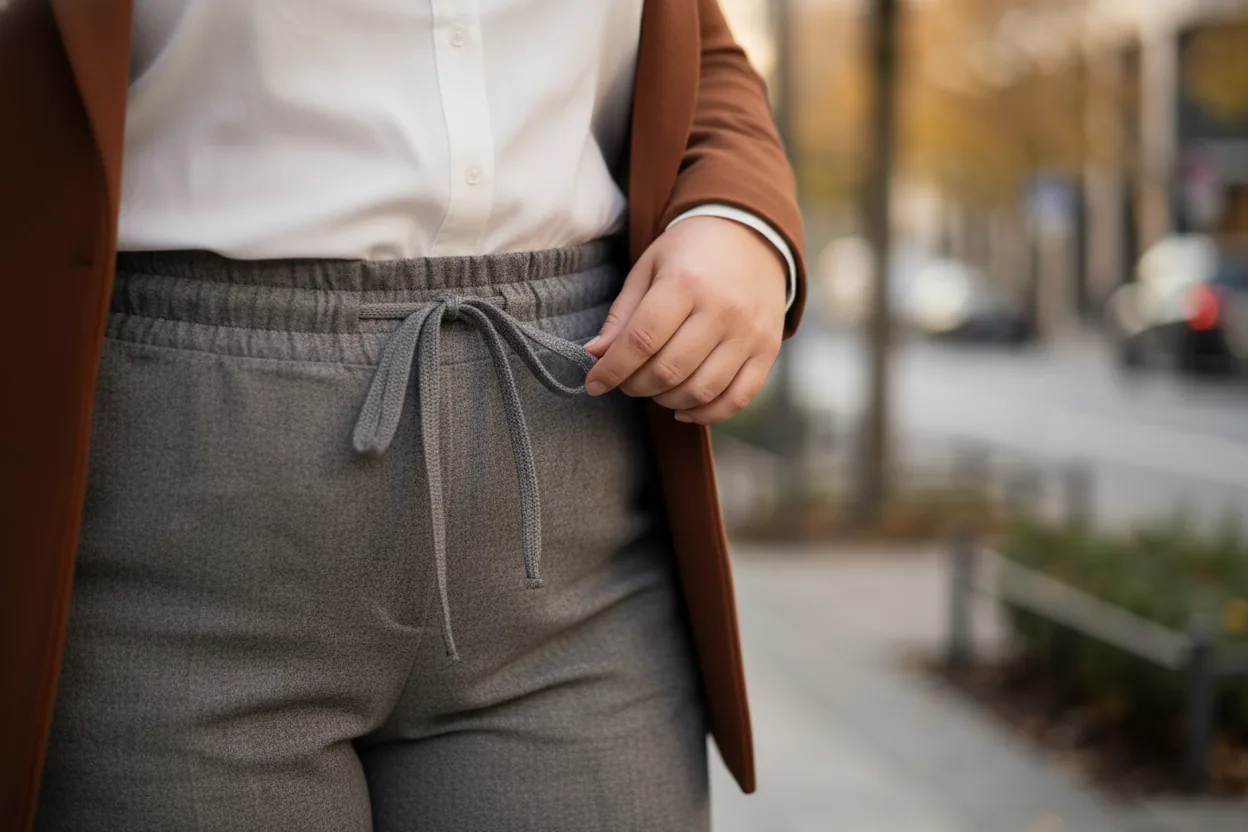
If you have a difference between waist and hips, this rule often works: choose the size by hips, and “adjust” the waist with the waistband (elastic/adjustment/construction). Because you can’t pull in the hips with a belt, but you sometimes can the waist.
Sometimes this literally means a small detail — softer adjustment or a belt that supports instead of squeezing.
The biggest sign of the wrong rise: pulling at the crotch or “shortening your stride”
It’s that feeling when you take a step and the pants seem to pull the fabric between your legs, or you want to take small steps because otherwise it’s “uncomfortable.”
That’s not “your walk.” That’s insufficient crotch depth or a poor combination of rise and cut.
Signs the problem is specifically the rise:
- lifting your knee pulls at the crotch;
- the waistband rides up and “digs in” while sitting;
- strange folds form radiating from the crotch;
- the pants seem to “jump” up/down while moving.
In plus size, comfort depends not only on height, but on the ease in the crotch area and the right shape of the crotch seam.
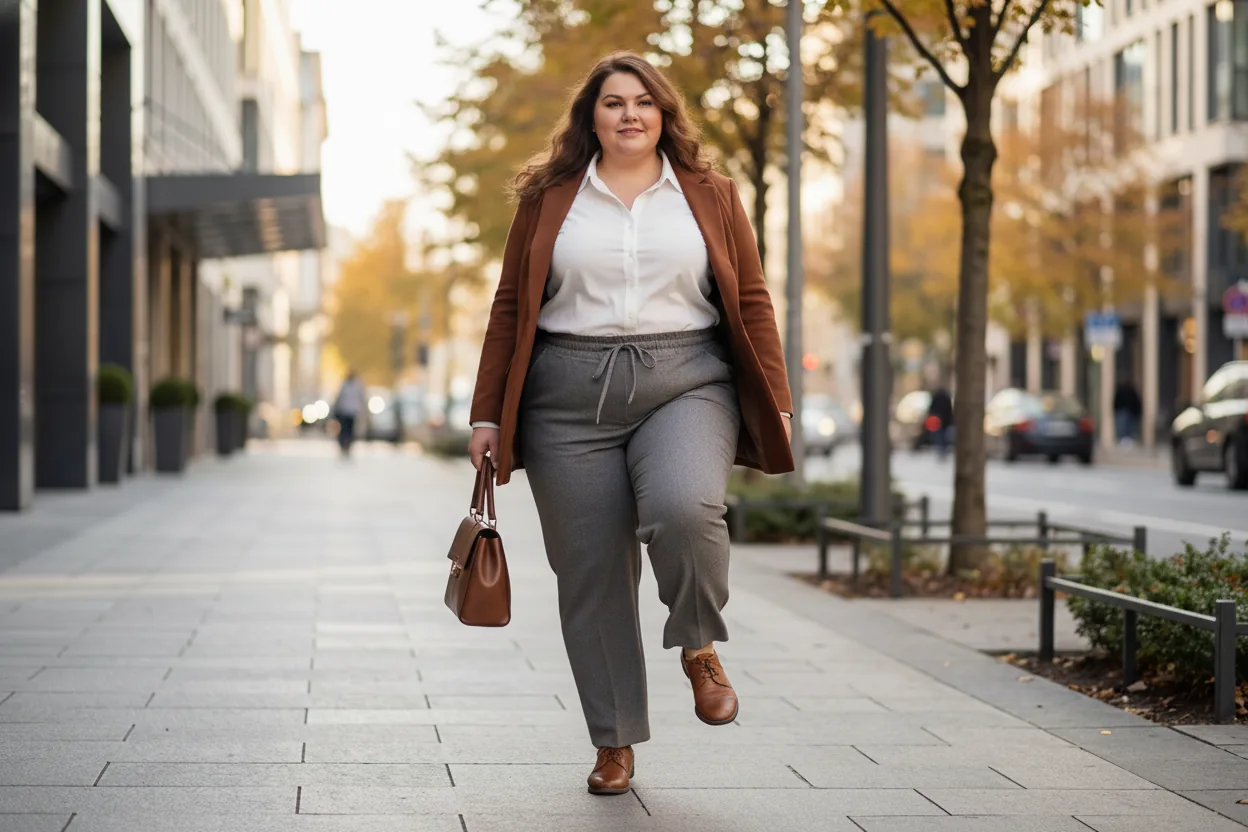
How to choose a rise by how your body feels (without toxic “body types”)
If the belly is the area that pinches most
What usually works:
- mid rise, or
- high rise with a soft waistband, where the top doesn’t “cut in” while sitting.
A simple principle applies here: the waistband should sit so that, while seated, you can breathe normally.
If the hips are pronounced and the waist is smaller
Look for:
- a rise that really fixes at the waist (often high/mid),
- a waistband with adjustability (elastic/drawstring/stretch inserts).
This removes the typical “loose at the waist — slides down” problem.
If the waist isn’t very pronounced
Usually more comfortable:
- mid rise,
- soft waistbands that don’t require “the waist as support.”
Pants cut and rise: why two “identical” options sit differently
Rise always works together with the cut. In plus size this is especially noticeable.
- Straight-leg pants are often comfortable because they don’t cling to the thigh and give freedom
- Palazzo/wide-leg can be very comfortable if the waistband is right and doesn’t pinch
- Joggers/elastic-waist are often about comfort, but it matters that the elastic doesn’t squeeze
- Tailored/classic styles may require a more precise rise match because the fabric is denser
Sometimes you think “a high rise doesn’t suit me,” when actually what doesn’t suit you is a high rise + stiff waistband + dense fabric. In a softer construction, a high rise can suddenly become perfect.
Fabric: how it affects rise in plus sizes
For comfort, it’s important to know two parameters:
- stretch (does the fabric give),
- density and “memory” of the fabric (does it hold shape or drape softly).
What usually feels more comfortable in everyday wear:
- fabrics with some stretch,
- softer, “living” fabrics that don’t create stiff pressure from above.
What can look beautiful but require a perfect fit:
- dense, non-stretch fabrics with a stiff waistband.
How to buy pants online without regretting it: which measurements you actually need
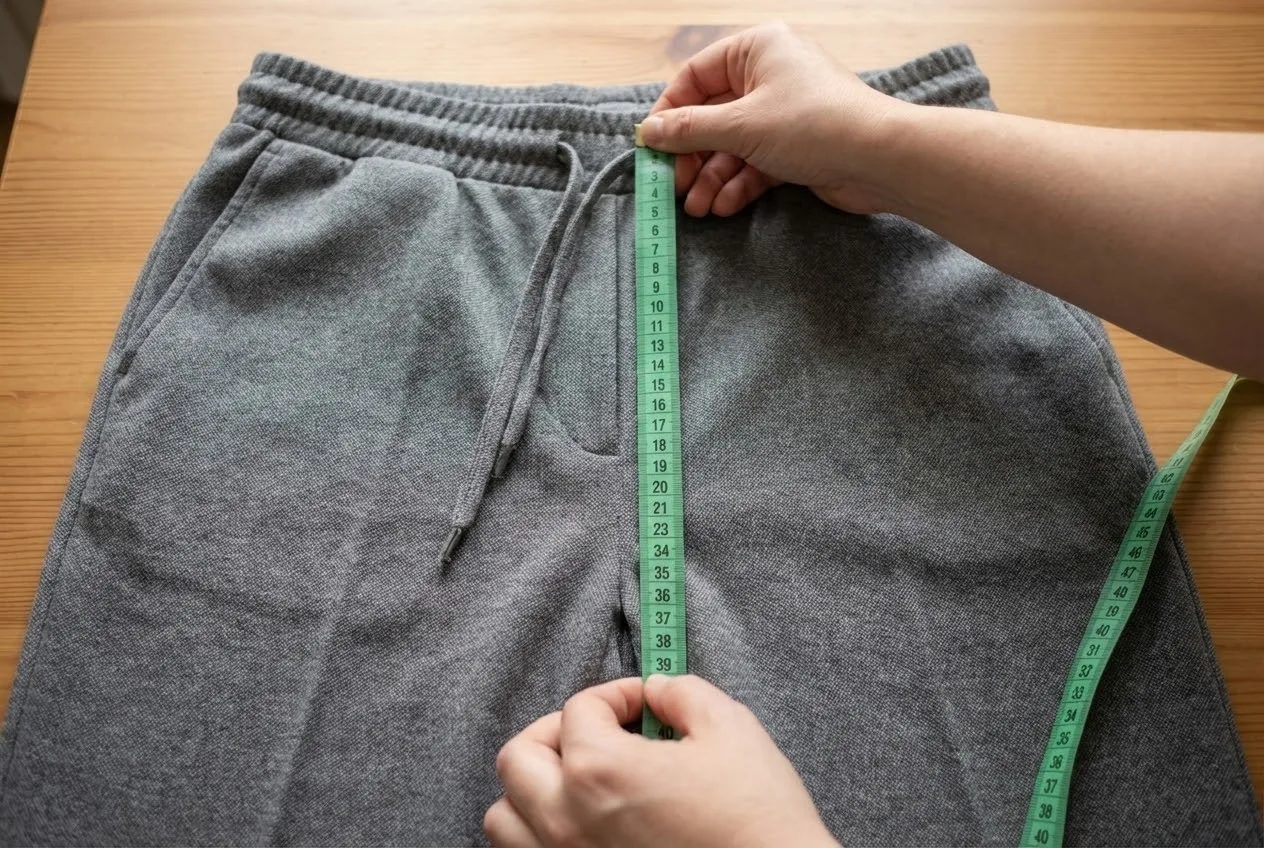
If you’re buying pants online (especially plus size), “waist/hip circumference” alone is often not enough. The most useful thing is to know or ask for:
- waist circumference at rest and stretched (if the waistband is elastic)
- hip circumference of the garment (along the hip line)
- thigh width (circumference/half-circumference at the leg)
- front and back rise height (front rise / back rise)
- inseam — so it’s not “too short/too long”
- fabric composition and presence of stretch
The most honest rule: if it matters to you that it doesn’t pinch the belly and doesn’t slide down, without the rise height (front/back) you’re playing the lottery.
So when choosing from the pants catalog, it’s better to look not only at “size,” but at the rise, waistband, and key measurements in the description right away.
A quick fitting test (it really works)
Don’t check pants only standing up. Check them the way you live:
- Sit down: the waistband doesn’t dig in
- Lift your knee: no pulling at the crotch
- Bend forward: doesn’t slide down at the back
- Walk a bit: no chafing
- Take a deep breath: easy to breathe
If you’re comfortable in these movements — the rise, cut, and waistband are “yours.”
Common plus size pants rise problems and simple solutions
Sliding down at the back
Most often the culprit is a low/insufficient back rise or a waistband that doesn’t hold. Solution: a higher rise or a waistband construction that holds better (elastic/drawstring/stretch).
Pinching the belly while sitting
Often this is a stiff waistband + high rise with no ease for sitting. Solution: a mid rise, or a high rise but with a soft waistband/stretch.
Pulling at the crotch
Lack of crotch depth or a poorly shaped crotch seam. Solution: a different cut/rise/size (this rarely “stretches out”).
Loose at the waist, fine at the hips
Go by the hips, and “bring in” the waist with the waistband: elastic, drawstring, construction. This is often not a flaw, just a feature of your proportions.
Rise is about your life: how you walk, sit, breathe, and move. If the pants “don’t make you think about them” throughout the day — that’s the right choice, even if a different model looks “more perfect” in a store photo.
What measurements are needed for buying online?
Besides waist and hips — front/back rise height, thigh width, and waistband/fabric stretch.
What to do if pants pull at the crotch?
That's a sign of poor rise depth/cut. It's better to change the model than to “tough it out”.
How to choose pants for a belly so they don't pinch?
Look for a mid-rise or a high-rise with a soft waistband/stretch. Check the fit while sitting.
Why does a high rise pinch even though the size fits?
Because of a stiff waistband, insufficient ease in the seat, or fabric without stretch.
Which pants rise is better for plus size?
Mid-rise or high-rise are usually more comfortable. But it's not just about “height” — the waistband and rise depth matter too.