 Size chart






Clothes That “Feel Stuffy” in Plus Size: How to Spot Fabric and Fit Issues
Reading time 7 min08.12.2025
If you know the feeling of “it’s not even that hot, but in these clothes it’s like being in a bag,” that’s not a quirk, and it’s not something you just have to “tough out.” Most often it’s a combination of fabric, cut, and layers — and the good news is you can predict it before you even buy.
For fabrics that breathe well, the TinDay catalog has, for example, the ZOE blazer in suiting viscose and the RainFlex jacket, which doesn't restrict movement even in rainy weather.
Below is a simple explanation of why clothes feel “stuffy” specifically in plus size, which materials are usually more comfortable, how fit plays a role, and how to check items during fitting so you don’t get it wrong.
What “feeling stuffy” means and why it’s felt more often in plus size
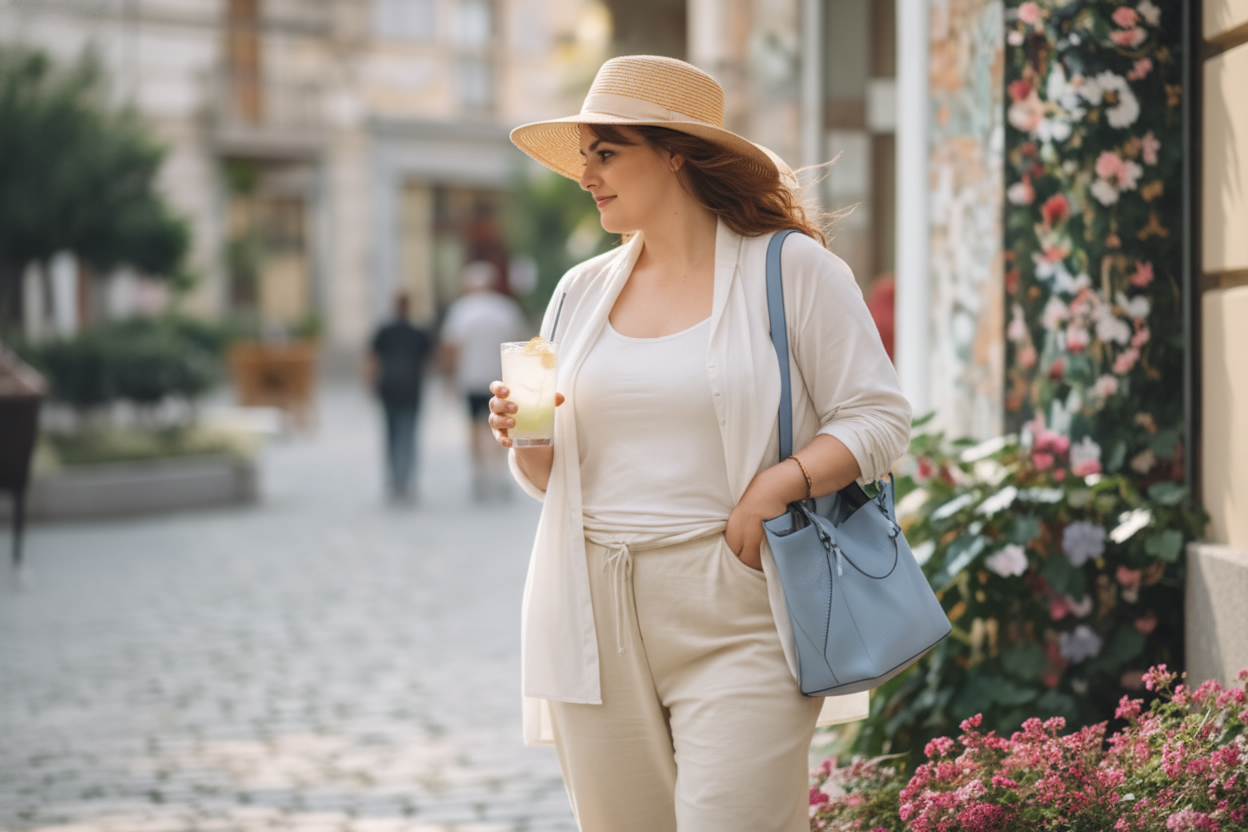
“Feeling stuffy” is when the body gets hot not from the surrounding temperature, but because the clothing creates a bag effect: air doesn’t circulate, moisture isn’t carried away, the skin heats up, and then you get that clinginess and the urge to take everything off right here and now.
In plus size this is felt more strongly for three reasons:
- First — heat exchange. If the fabric doesn’t let air through or traps moisture, the body quickly “overheats” under the layer of clothing.
- Second — friction. The inner thighs, the area under the bust, folds on the belly and back — wherever fabric constantly moves against the skin, discomfort arrives faster.
- Third — fit. Clothing that pinches, clings, or has stiff zones (waistband, cuffs, armhole) works like a “tourniquet”: air can’t get in, moisture builds up, and even “normal fabric” starts to feel unbearable.
So feeling “stuffy” is almost always a combination: fabric + cut + number of layers + specific contact zones.
5 reasons clothes feel stuffy (and it’s not always “because it’s synthetic”)
The fabric has poor air permeability
Some materials inherently have low breathability, or they’re woven/knitted in a way that barely lets air through. The result is a heat “dome” next to the body.
The fabric doesn't wick moisture
Some fabrics absorb moisture (and then hold onto it for a long time), while others wick it away (spreading it across the surface and drying faster). If the fabric accumulates moisture, you’ll feel clingy and like you’re in a steam room.
A finish/coating blocks "breathing"
Even a normal base fabric can feel stuffy if there’s a dense coating, impregnation, or film on top. This is common in raincoats and outerwear that needs water resistance.
A poor fit: too tight where you need room
In plus size, the critical zones are the armhole, the area under the bust, the belly, the crotch, and the inner thighs. If these are “snug,” the fabric acts like insulation and increases friction.
Improper layering
Two layers of "non-breathing" fabrics create a sauna effect even in winter. The right base layer, on the other hand, can sometimes save you even with a "heavy" fabric on top.
Fabrics that are usually comfortable in plus size
Here's the key point: comfort isn’t just about being “natural.” Comfort is air + moisture control + softness + freedom of movement.
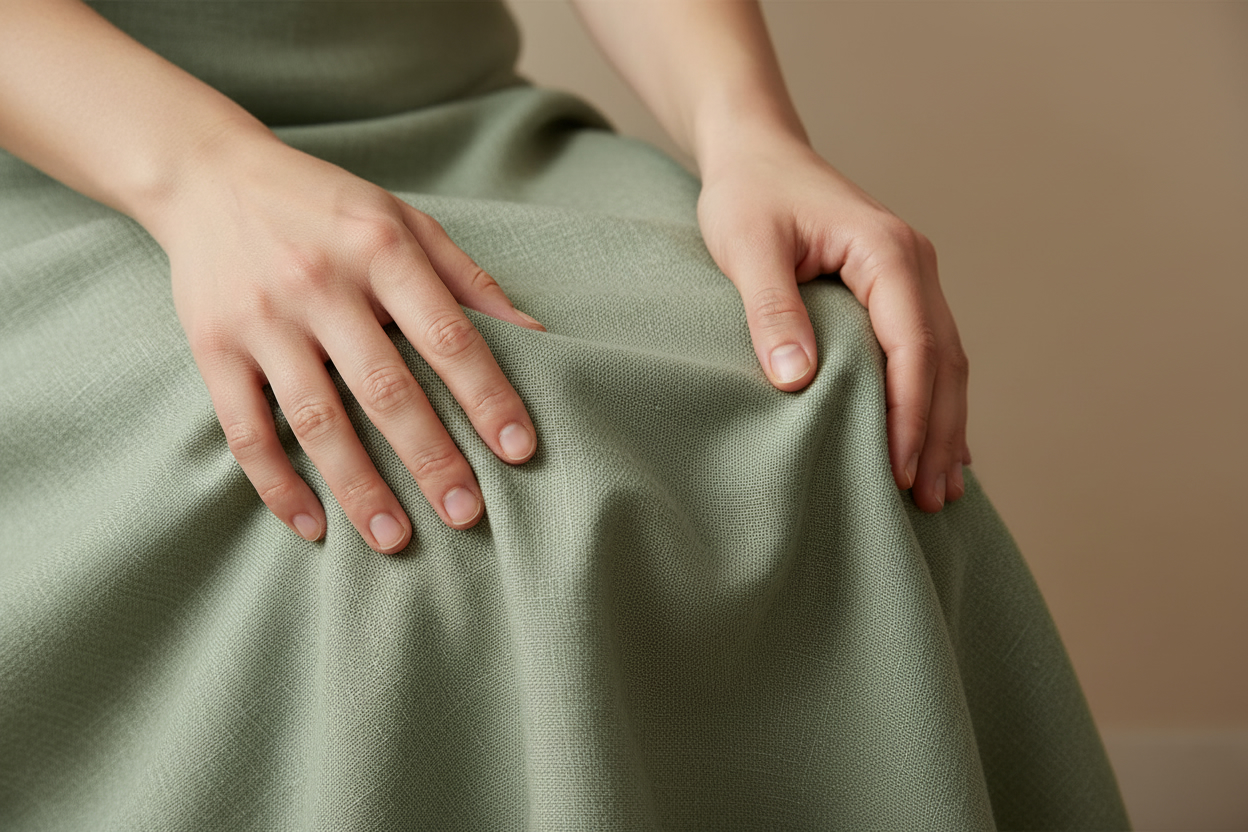
Cotton (especially for basics and summer)
Cotton is often seen as a “cure-all” because it feels pleasant against the skin and is easy to understand. It works well as a base, but there’s a nuance: cotton can absorb moisture and take longer to dry, so in heat or with a lot of movement it can feel “damp” if the cut is tight or the fabric is dense.
When cotton is great: a loose cut, thinner or medium-weight fabrics, comfortable t-shirts/long sleeves/loungewear.
When it can feel stuffy: dense, clingy knits, many layers, warm rooms.
Viscose (the “cool second skin” effect)
Viscose often gives that desired feeling: soft, feminine, pleasant, and “not burning hot.” It can be very comfortable because it drapes nicely and doesn’t add bulk. But it’s important that the cut doesn’t squeeze and that the fabric quality is good — then it works for the body rather than against it.
When viscose is great: long-sleeve tops, dresses, blouse-type pieces, an everyday “first layer.”
Linen and linen blends (for the heat)
Linen is one of the most comfortable options in the heat: it lets air through well and gives a “dry” feeling. If pure linen feels too stiff, blends (with viscose or cotton) often help — they keep the breathability but add softness.
Brushed knit/sweatshirt fabric (for mid-season/winter)
This type of fabric varies: thinner, denser, brushed or not. In plus size it’s comfortable if:
- the cut isn’t tight,
- the inside doesn’t feel scratchy,
- the body has an “air gap,” not a cling fit.
Fabrics that often give a “sauna” effect (but not always!)
Smooth polyester without the right weave/structure
Not all synthetics are the same. The problem isn’t the word “polyester” — it’s that smooth, dense fabrics can have poor air permeability and create clinginess, especially if the item is fitted.
Dense coatings in outerwear
A water-repellent surface often means the outer layer is more "sealed." Here construction matters: lining, ventilation, the right fit, and the ability to unbutton/open up.
“Pretty” fabrics with poor ventilation
Some materials look very striking, but on the body they can feel "lifeless." In plus size this is felt quickly, because the body doesn't tolerate compromises for long.
How to tell a fabric will feel stuffy BEFORE you buy
There are three signs that often work even when shopping online:
The texture description
If the fabric is described as dense, smooth, holds its shape, but nothing is said about breathability/comfort — look closer. “Holds its shape” often means less air.
Whether there's a lining
A lining can either help or make things worse, depending on the material. If the lining is synthetic and dense, plus a dense outer layer — there's your sauna.
Fit and ease
Even a great fabric can feel stuffy if the item is snug. If you know the belly/hip area is sensitive, build in ease from the start.
A cut that reduces "stuffiness" in plus size
When people say "I need a fabric that doesn't feel stuffy," sometimes the right answer is "you need a cut that gives you air."
Ease in the armhole and shoulder
Where the arm moves, you need air. If the armhole is narrow, you'll feel "stuffy" even in a t-shirt.
Enough volume at the belly and hips
Not a "parachute," but ease for movement and sitting. In plus size, the body changes shape more while moving, and if the fabric has nowhere to "go," it starts to overheat and chafe.
Length and the friction zone
Sometimes comfort comes down to length: shorts/skirts/pants. If there's friction at the inner thighs, the material can be perfect, but discomfort will still come from the mechanics of movement. Here, what matters is either the length or an extra layer/anti-chafing product.
What to choose in summer (plus size): so it doesn't stick or "boil"
The most comfortable scenarios are usually:
- Viscose/linen/cotton with a loose cut
- Lighter colors (not as a "rule for the sake of it," but as physics: darker colors heat up more in the sun)
- A minimum of dense overlays, dense waistbands, and "bag-like" fabrics
A typical summer mistake:
Buying a fitted piece "to look put together" — and ending up with stuffiness, clinginess, and discomfort while moving. Summer comfort in plus size almost always starts with an air gap.
What to choose in winter (plus size): warm but not damp
In winter, feeling "stuffy" actually happens even more often, because people layer like a "cabbage": a warm sweater + outerwear + yet another layer.
The winter rule
The body needs not just warmth, but moisture removal too. If you sweat and the moisture stays trapped under your clothes, you'll get cold — even in a warm down jacket.
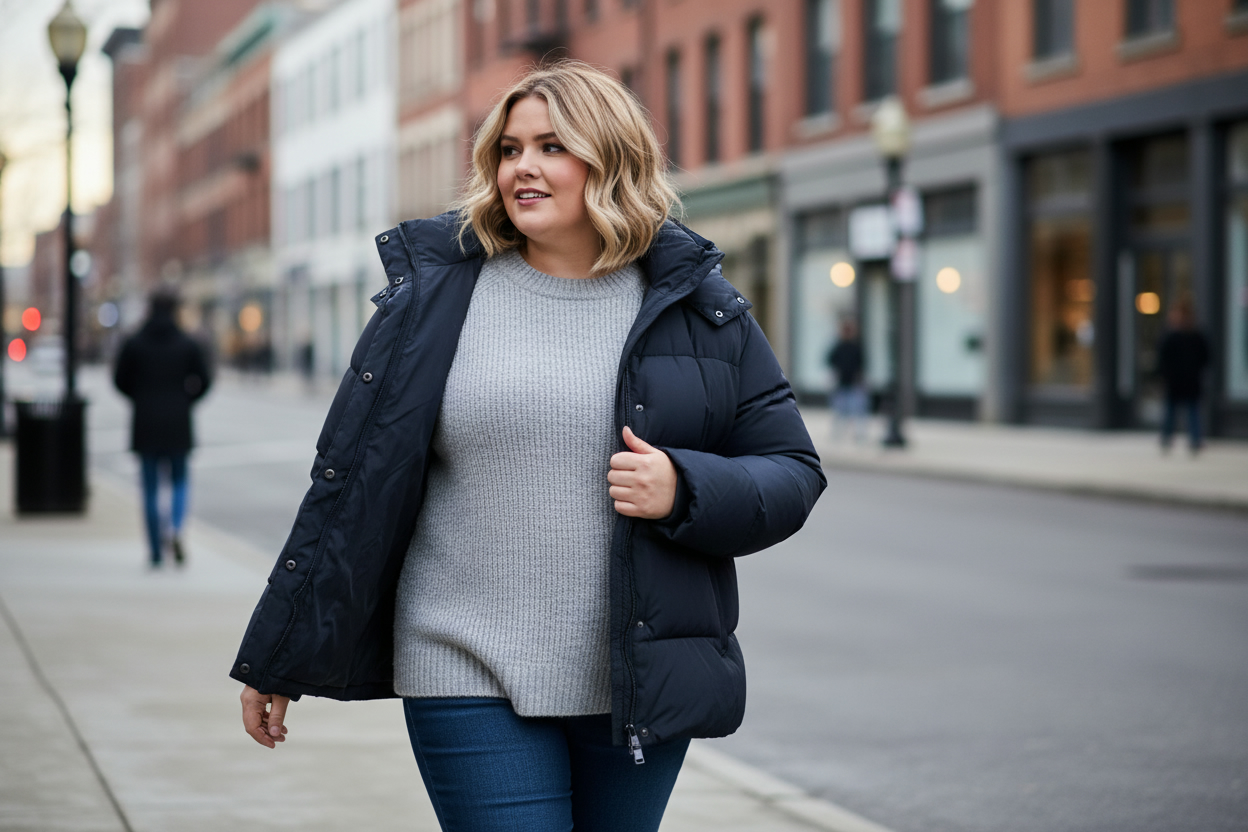
How to layer smartly
- First layer: soft, comfortable, doesn't irritate the skin
- Second layer: provides warmth
- Outer layer: protects from wind/rain, but shouldn't create a "film with no way out"
If outerwear feels "sealed," small details often help: being able to unbutton it, the collar, ventilation, and a fit that isn't too tight.
Care that affects "stuffiness"
Sometimes a fabric starts to feel "stuffy" not because it's bad, but because care has "clogged" it:
- fabric softener can leave a film (especially on synthetic fabrics), making the feeling worse
- clogged fibers (dust, oils, product residue) reduce breathability
- improper drying can make fabric stiffer and less pleasant against the skin
If something used to be fine and then became uncomfortable, sometimes the simple fix helps: gentler washing, less product, an extra rinse.
A practical checklist: how to check "stuffy or not" during a fitting
- Put it on and wear it for 3–5 minutes (not just 20 seconds in front of the mirror)
- Raise your arms, walk around, sit down — feel the armhole, crotch, waistband
- Pay attention to these zones: under the bust, belly, back, inner thigh
- If there's already clinginess/a heat wave during the fitting, it'll get worse at home
This isn't about "toughing it out." It's about the body signaling right away.
In short: "not stuffy" isn't some magic fabric composition — it's a feeling of air and freedom. When there's ease in the armhole/belly/hips, smart layering, and a material that doesn't hold moisture "inside," the body stops fighting the clothing — and just lives.
Why does a jacket or raincoat feel stuffy?
Because water-repellent coatings can reduce the fabric's “breathability”. What matters here is the lining, fit, ventilation options, and layering underneath.
What to do if clothing feels stuffy around the belly/under the bust?
Look for a softer fit, more ease in those areas, and avoid stiff waistbands and dense “closed” fabrics. Sometimes the right base layer solves it.
Is it true that synthetics always feel stuffy?
No. The problem isn't the word “synthetic” but the specific weave structure, density, and finish. Some synthetic materials can wick moisture, but smooth, dense fabrics often feel clingy.
Which fabrics don't feel stuffy in plus size?
Viscose, linen/linen blends, cotton in a relaxed cut are often more comfortable, as well as fabrics with good moisture-wicking. But the combination of “fabric + fit” is what really decides.
Why does clothing feel hot/stuffy in plus size even when it's cool?
Most often due to poor fabric ventilation or a tight fit: air doesn't circulate, moisture gets trapped, and the body overheats under the clothing.